
Organic
Dried White Lotus Seeds Wholesale Manufacturer & Supplier in China
- Cored and whole seed options
- Consistent size and clean appearance
- Food safety testing available
- Bulk and private-label supply
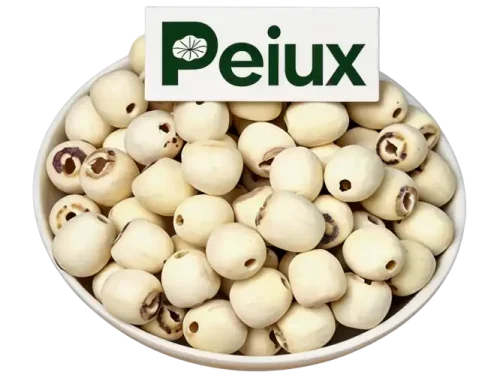
Peiux
Built for Consistent Dried White Lotus Seeds Sourcing
- Direct sourcing from established Chinese lotus seed growing regions for stronger origin traceability.
- Controlled processing helps preserve natural color, structure, flavor, and cooking characteristics.
- Application-focused grading supports different requirements across soups, fillings, beverages, and food manufacturing.
- Transparent specifications and batch documentation make supplier evaluation and quality control more efficient.
- Flexible sourcing support helps overseas buyers develop products from initial samples to recurring orders.
Peiux Dried White Lotus Seeds for Reliable B2B Sourcing
Peiux supplies Dried White Lotus Seeds to food manufacturers, importers, distributors, and private-label brands through a sourcing model built around origin, processing, quality control, and export support. We connect reliable Chinese lotus seed resources with overseas buyers, providing application-suitable products, clear specifications, and responsive sourcing support.
From sample evaluation and product development to recurring bulk orders, Peiux focuses on making lotus seed procurement more consistent, efficient, and easier to manage.
Featured Dried White Lotus Seeds We Supply
Whole Polished Cored Dried White Lotus Seeds
Whole Polished With‑core Dried White Lotus Seeds
Split Polished Dried White Lotus Seeds
Whole Hand‑peeled Cored Dried White Lotus Seeds
Whole Hand‑peeled With‑core Dried White Lotus Seeds
Split Hand‑peeled Dried White Lotus Seeds
Why You Choose Peiux Dried White Lotus Seeds?
Naturally White Appearance
Light-colored kernels provide a clean, appealing appearance for finished food products.
Mild, Neutral Flavor
Delicate flavor blends easily with sweet, savory, and beverage formulations.
Starch-Rich Structure
High starch content contributes body, texture, and smoothness after cooking.
Firm Kernel Texture
Whole kernels maintain their structure while becoming tender through proper cooking.
Easy Rehydration
Dried kernels can absorb water effectively before cooking and processing.
Cored Seed Option
Removing the bitter lotus embryo creates a cleaner, milder eating experience.
Versatile Food Ingredient
Suitable for soups, desserts, fillings, pastries, beverages, and processed foods.
Long-Distance Storage
Properly dried kernels are convenient for extended storage and international transportation.
Peiux
More Usable Product for More Efficient Processing
For food manufacturers, the real cost of lotus seeds goes beyond the price per kilogram. Peiux Dried White Lotus Seeds are selected and processed with attention to usable kernels, helping reduce unnecessary losses during preparation and production.
Consistent kernel integrity supports more predictable yields, easier portioning, and smoother ingredient handling across soups, fillings, desserts, and other commercial food applications.
Company Advantage
Peiux builds its Dried White Lotus Seeds business around coordinated sourcing, processing, quality control, and export fulfillment. Our production workflow covers raw material selection, cleaning, peeling, embryo removal when required, drying, sorting, and final packing.
By managing key processing stages closely, Peiux helps overseas buyers maintain clearer product specifications, traceable sourcing, and dependable supply from Chinese lotus-growing regions to international markets.
Dried White Lotus Seeds for Diverse Food Applications
Food Manufacturing
Bakery & Pastry
Soup & Ready-to-Cook Foods
Dessert & Sweet Food
Beverage & Plant-Based Formulations
Ingredient Distribution
Peiux Dried White Lotus Seeds, From Trusted Origins to Global Food Applications
Reliable lotus seed sourcing, careful processing, and versatile performance for international food businesses.
More About Peiux Lotus Seeds
| Item | Specification |
| Product Name | Dried White Lotus Seeds |
| Brand | Peiux |
| Product Type | Natural dried lotus seed ingredient |
| Origin | China |
| Processing Options | Whole seeds, cored seeds, customized processing options |
| Appearance | Clean, natural white to light-colored kernels |
| Flavor Profile | Mild, delicate, and naturally sweet taste |
| Texture After Cooking | Soft, tender, and slightly firm structure |
| Application | Soups, desserts, bakery fillings, beverages, and food manufacturing |
| Processing Method | Cleaning, sorting, drying, and optional embryo removal |
| Packaging Options | Bulk packaging and customized packaging solutions available |
| Storage Condition | Store in a cool, dry place away from moisture |
| Supply Capability | Suitable for wholesale, distribution, and industrial food applications |
Packaging Type | Specification | Applicable Scene | Custom Service |
|---|---|---|---|
Industrial Bulk Pack | 25kg/Food-grade Woven Bag with Inner PE Film | Factory raw material processing & large wholesale | Support logo and outer box customization |
Standard Export Pack | 10kg/ Vacuum Sealed Aluminum Foil Bag | Medium importers and distributor stocking | Adjustable packaging weight on request |
Retail Private Label Pack | 100g/250g/500g Custom Vacuum Bag | Supermarket sales and brand retail | Full private label and pattern customization |
Gift Box Pack | Customized Color Gift Box with Inner Independent Packaging | High-end gift sales and holiday promotion | Support exclusive design and size adjustment |
Storage Condition | Specific Requirement | Effect & Note |
|---|---|---|
Temperature | Store at 15℃-25℃, avoid high temperature | Prevents nutrient loss and material deterioration |
Humidity Environment | Dry & ventilated place, humidity ≤60% | Effectively avoids moisture absorption and mold growth |
Sealing Requirement | Keep tightly sealed after opening | Isolates air and prevents oxidation discoloration |
Light Condition | Avoid direct long-term sunlight exposure | Protects natural color and original nutrition |
Shelf Life | 18 months under standard storage | Guarantees stable taste and food safety validity |
Testimonials
Dried White Lotus Seeds FAQs
What are Dried White Lotus Seeds?
Dried White Lotus Seeds are the dried edible kernels of the lotus plant, Nelumbo nucifera. They are commonly peeled or dehulled and may be sold with the bitter lotus embryo removed. The dried kernels have a mild flavor and starch-rich structure, making them suitable for soups, desserts, fillings, porridge, bakery products, beverages, and other food applications.
Are Dried White Lotus Seeds the same as lotus nuts or makhana?
Dried White Lotus Seeds may be described as lotus seed kernels or lotus nuts in some commercial contexts, but they are not the same product as makhana or fox nuts. Lotus seeds generally come from Nelumbo nucifera, while makhana is usually associated with Euryale ferox. Their botanical origin, structure, processing methods, texture, and culinary uses are different.
What is the difference between cored and non-cored lotus seeds?
The center of a lotus seed contains a green embryo, often called the lotus plumule or lotus heart, which can have a distinctly bitter taste. Cored or de-cored Dried White Lotus Seeds have this embryo removed during processing, creating a milder eating experience and reducing preparation work for end users. Non-cored seeds retain the embryo and may be preferred for certain traditional applications.
How are Dried White Lotus Seeds processed?
Commercial processing commonly involves raw material selection, cleaning, shell or hull removal, peeling or dehulling, optional embryo removal, drying, sorting, and final packing. Each stage can influence appearance, moisture stability, kernel integrity, and cooking performance.
Why is moisture control important for Dried White Lotus Seeds?
Moisture control plays an important role in the stability of dried food ingredients. Excess moisture can influence texture, storage performance, microbial risk, and the physical condition of the kernels. Water activity is also relevant because it describes the availability of water for microbial and chemical processes and is not identical to moisture content.